Work with me · For schools & education

Growing children starts with supporting the ecosystem around them.

Children do not learn in isolation. They grow inside relationships. Inside classrooms. Inside families. Inside school communities.

Discuss a school project →
Experience15+ years with children, families and educators.
SettingsSchools, family spaces and international communities.
FocusRegulation, inclusion, communication and belonging.
ScopeStudents, teachers, parents and leadership teams.

When a child struggles with attention, regulation, behaviour, inclusion, anxiety, conflict, or belonging, the challenge rarely belongs to the child alone.

It lives within a wider system.

My work supports the entire ecosystem around the child — students, educators, families, and leadership teams — creating the conditions where learning, connection, wellbeing, and growth can flourish.

Through body-based practices, relational intelligence, emotional regulation, communication, and community-building, I help schools move from managing behaviour to understanding what lies underneath it.

Because children learn best when they feel safe enough to belong.

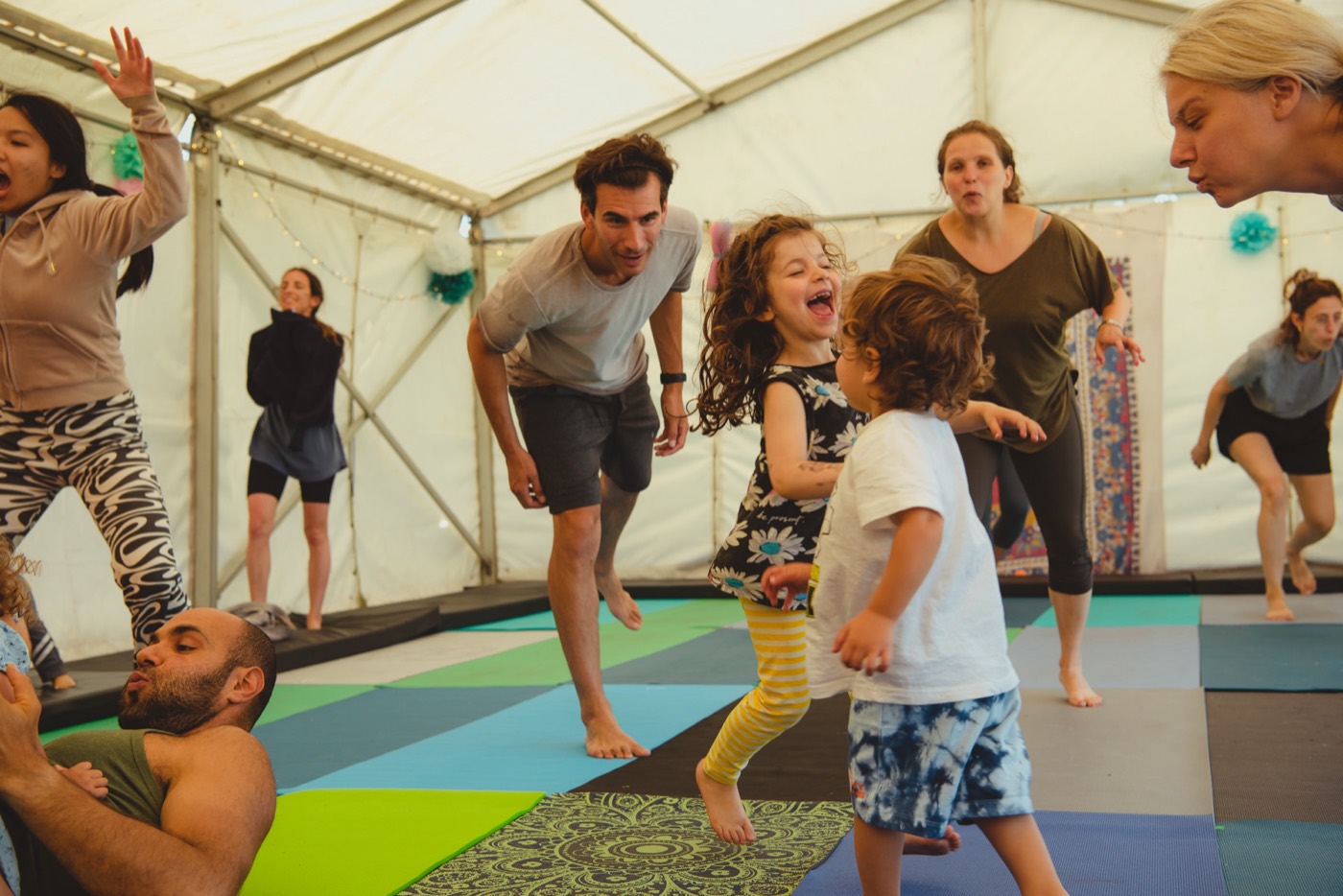
Children and adults in a group movement session
My approach

Beyond behaviour.

Many interventions focus on correcting behaviour. My work begins with understanding it.

Behind every challenging behaviour there is often:

Visible layer The behaviour we see is only the starting point.
stress overwhelm unmet needs nervous system dysregulation difficulty belonging difficulty feeling seen or understood

Drawing from over fifteen years working with children, families, educators, neurodivergent students, and international schools across the UK, Germany and Italy, I bring together:

Embodiment & Nervous System Regulation

Helping children and adults understand what happens in the body under stress and develop practical regulation tools.

Relational Intelligence

Supporting healthier communication, conflict resolution, empathy, cooperation, and belonging.

Trauma-Informed Practice

Creating environments where children and adults can feel safe, respected, and able to learn.

Neurodiversity-Informed Support

Working with children presenting ADHD, autism, sensory differences, emotional regulation challenges, and social difficulties.

Whole-System Thinking

Because lasting change rarely happens by working with one person alone. The most meaningful transformations occur when children, teachers, families, and school leaders move in the same direction.

Group learning through movement and relational play
How I work with schools

Four ways into the system.

01

Student Support

Individual and small-group interventions focused on:

  • emotional regulation
  • self-awareness
  • social skills
  • self-esteem
  • executive functioning
  • neurodivergent learners
  • inclusion and belonging
02

Classroom Programmes

Experiential workshops combining:

  • movement
  • play
  • mindfulness
  • communication
  • emotional literacy
  • cooperation

Designed to strengthen classroom culture and relational safety.

03

Teacher Training

Practical professional development on:

  • emotional regulation in the classroom
  • co-regulation
  • challenging behaviour
  • neurodiversity
  • classroom dynamics
  • conflict resolution
  • communication skills
  • teacher wellbeing
04

Parent Support

Workshops and coaching pathways helping families create consistency between home and school.

Because children benefit most when the adults around them work together.

Case studies · In the field
Children practicing cooperative movement
Case study 01

Superheroes of Kindness

Via Spiga Primary School — Milan

A four-session programme designed to strengthen emotional intelligence, self-regulation, cooperation, and relational skills in a Year 5 classroom. Through movement, mindfulness, play, guided reflection, and embodied learning, students explored:

Explored

  • emotional awareness
  • body boundaries
  • respectful communication
  • kindness in action
  • cooperation over competition
  • conflict transformation

Outcomes

  • Greater emotional awareness
  • Improved ability to express needs and boundaries
  • Increased empathy and cooperation
  • Better self-regulation through breath and movement
  • Stronger sense of belonging within the group

Children's voices

Now I know that if I feel sad or angry, it's not a problem.
I learned how to say no and still be kind.
Kindness changes everything.
We learned how to fight without hurting each other.
I was scared at first, but then I used the warrior breath and felt calm.
You helped me overcome some of my biggest fears.

Key themesBody Awareness · Emotional Literacy · Kind Communication · Playful Conflict Resolution · Self-Regulation · Belonging

Embodied classroom support session
Case study 02

Building Regulation Around One Child

Guido Galli Secondary School — Milan

A whole-system intervention designed to support a student experiencing significant social integration difficulties, emotional dysregulation, and peer conflict. Rather than focusing exclusively on the student, the project involved individual student support, teacher training, classroom interventions, parent coaching, and collaborative planning between all adults involved.

Initial challenges

  • impulsivity
  • frequent classroom interruptions
  • difficulty respecting boundaries
  • verbal provocation
  • high anxiety
  • dependence on adult reassurance
  • social exclusion within the class

Intervention

  • somatic regulation practices
  • therapeutic play
  • structured playfight
  • emotional awareness work
  • relational skills development
  • responsibility building
  • teacher support and coaching
  • family involvement

Teachers reported

  • Improved classroom integration
  • Increased emotional awareness
  • Better listening and communication
  • Greater responsibility for behaviour
  • Improved peer relationships
  • Increased self-confidence

Family feedback

“Finally happy and calm.”

  • improved relationships
  • growing self-esteem
  • disappearance of long-standing tics
What educators say

From the staff room.

The most useful training I have attended in years.

This project created a concrete bridge between school and family.

It helped me understand that a child who disrupts the lesson is often a child in a state of emergency who first needs safety.

The training was practical, relevant, and deeply connected to everyday classroom life.

I became much more aware of my own state and how it affects the classroom.

The work with teachers, the student, and the whole class was incredibly valuable.

School cannot address violence, exclusion, and prejudice alone. We need approaches like this.

Available for schools

  • Nursery Schools
  • Primary Schools
  • Secondary Schools
  • International Schools

Formats

  • Individual student support
  • Classroom programmes
  • Teacher training
  • Parent workshops
  • School wellbeing projects
  • Inclusion and neurodiversity programmes
  • Conflict resolution programmes
  • Whole-school wellbeing initiatives
Resources

Free downloads.

Building Regulation Before Behaviour

A practical guide for educators.

Co-Regulation in the Classroom

Simple tools for stressful moments.

Understanding Dysregulation

Looking beneath behaviour.

Children do not learn from programmes. They learn from people. From the adults who meet them every day. From the relationships that surround them.

Schools are villages too.

My work helps schools become places where children feel safe enough to take risks, make mistakes, belong, and grow. Because when connection changes, learning follows.

Let's talk about your school →